News in Review
| The Monetary Policy Committee voted 6–3 to leave Bank Rate unchanged at 3.75% at its July meeting | The Chancellor confirmed the next Budget for 28 October 2026, alongside an Office for Budget Responsibility forecast | Prime Minister Andy Burnham addressed social care reform in England and did not rule out tax rises to help fund changes |
“The impact of the energy shock on the UK economy remains uncertain”
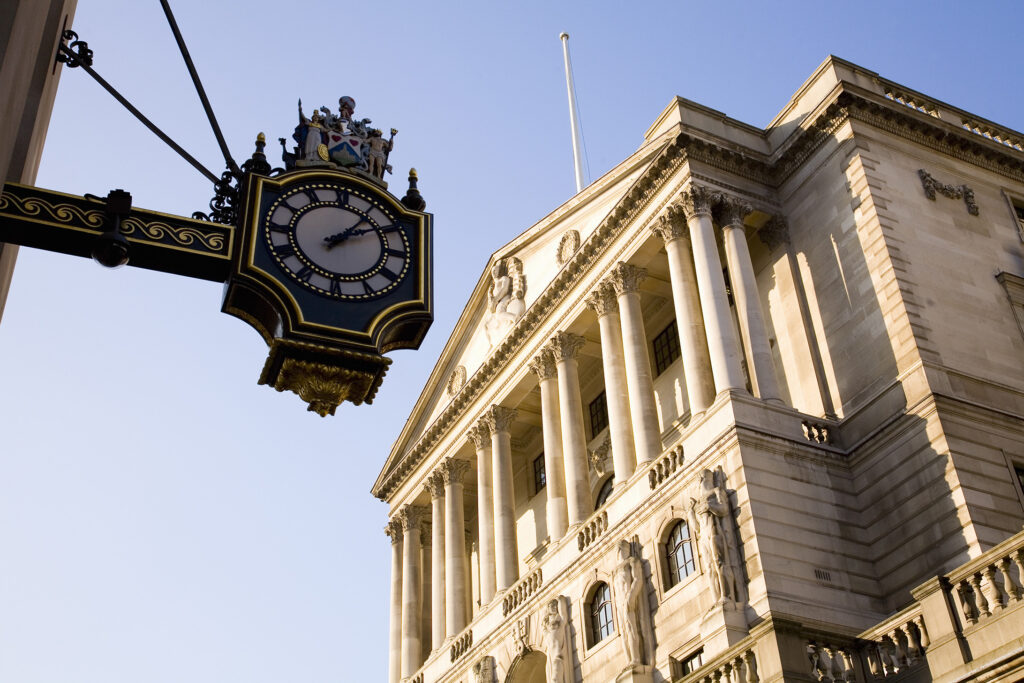
Last week, the Monetary Policy Committee voted to maintain Bank Rate at 3.75% for the fifth consecutive meeting. Six members voted to hold rates, while three opted for an increase to 4% – a slight shift from the previous meeting, which saw a majority of 7-2.
The decision comes after the latest inflation statistics were better than expected, dropping to 2.6.% in June from 2.8% in April and May. However, Bank of England (BoE) Governor Andrew Bailey warned that this is likely to be a temporary relief, saying, “Inflation has fallen faster than expected but the conflict in the Middle East continues to mean high and volatile energy prices. That will cause inflation to rise again this year.”
Reflecting this uncertainty, the BoE added, ‘the impact of the energy shock on the UK economy remains uncertain’ and that the outlook will depend on how long higher energy prices persist, how widely their effects spread through the economy and whether they lead to broader inflationary pressures. Despite these risks, it remains committed to achieving its 2% inflation target sustainably.
Meanwhile, the FTSE 100 hit a record high as investors moved away from tech stocks. The UK Large Cap Index rose as high as 10,951 last Wednesday before falling back slightly. Investors have been drawn to the UK stock market due to its lack of exposure to the technology sector.
US interest rates were also held for the fifth time last week, staying in a range between 3.5% and 3.75%. US inflation rates have been above the 2% target for over five years. Kevin Warsh, the new Fed Chair, said he is committed to bringing inflation down, but it will take time.
Budget and OBR forecast confirmed
The Chancellor, John Healey, has confirmed that the next Budget will take place on 28 October 2026, alongside a new economic and fiscal forecast from the Office for Budget Responsibility (OBR). The announcement provides businesses and investors with greater clarity on the government’s plans for the economy and public finances. Healey said the Budget would focus on supporting growth across the UK while maintaining fiscal discipline. In a letter to the Treasury Committee, he stated, ‘Fiscal credibility is the bedrock of economic stability and national security.’ The Chancellor also reaffirmed the government’s commitment to its fiscal rules, while retaining flexibility to respond to ongoing global economic uncertainty.
Burnham commits to social care reform
Last week, Prime Minister Andy Burnham delivered a speech on social care reform in England, promising to address the crisis after years of government inaction. He announced that Baroness Louise Casey’s independent review of adult social care will now be published next summer, instead of 2028. This will help inform Burnham’s plans to introduce a new National Care Service that is integrated with the NHS, coinciding with a fair pay agreement which will come into force from 2028/29. Burnham did not rule out tax rises to help pay for these social care changes.
Retail sales update
The latest figures from the Confederation of British Industry (CBI) show that retail sales volumes declined at a slower pace in the 12 months to July (a weighted balance of -26%, a slowdown from -54% in June). July’s sales were generally below seasonal norms, but to a lesser extent than the previous month. In August, it is anticipated that sales volumes will decline at a similar pace to July.
Martin Sartorious, CBI Lead Economist, commented, “Retailers reported that the ongoing sales downturn lost steam in July, but a recovery still looks some way off as gloomy sentiment and elevated cost pressures weigh on activity.”
Less pessimism in private sector
CBI’s growth indicator suggests that pessimism around the private sector is easing. Firms still anticipate that activity will fall in the three months to October but, at a weighted balance of -18%, expectations are the least negative since March 2026. Manufacturing activity is expected to drop (-30%), along with more modest falls in business & professional services (-14%) and consumer services (-14%). In the three months to July, private sector activity fell by -21%, the slowest pace since February.
Here to help
Financial advice is key, so please do not hesitate to get in contact with any questions or concerns you may have.
The value of investments can go down as well as up, and you may not get back the full amount you invested. The past is not a guide to future performance and past performance may not necessarily be repeated.
All details are correct at time of writing (5 August 2026)